
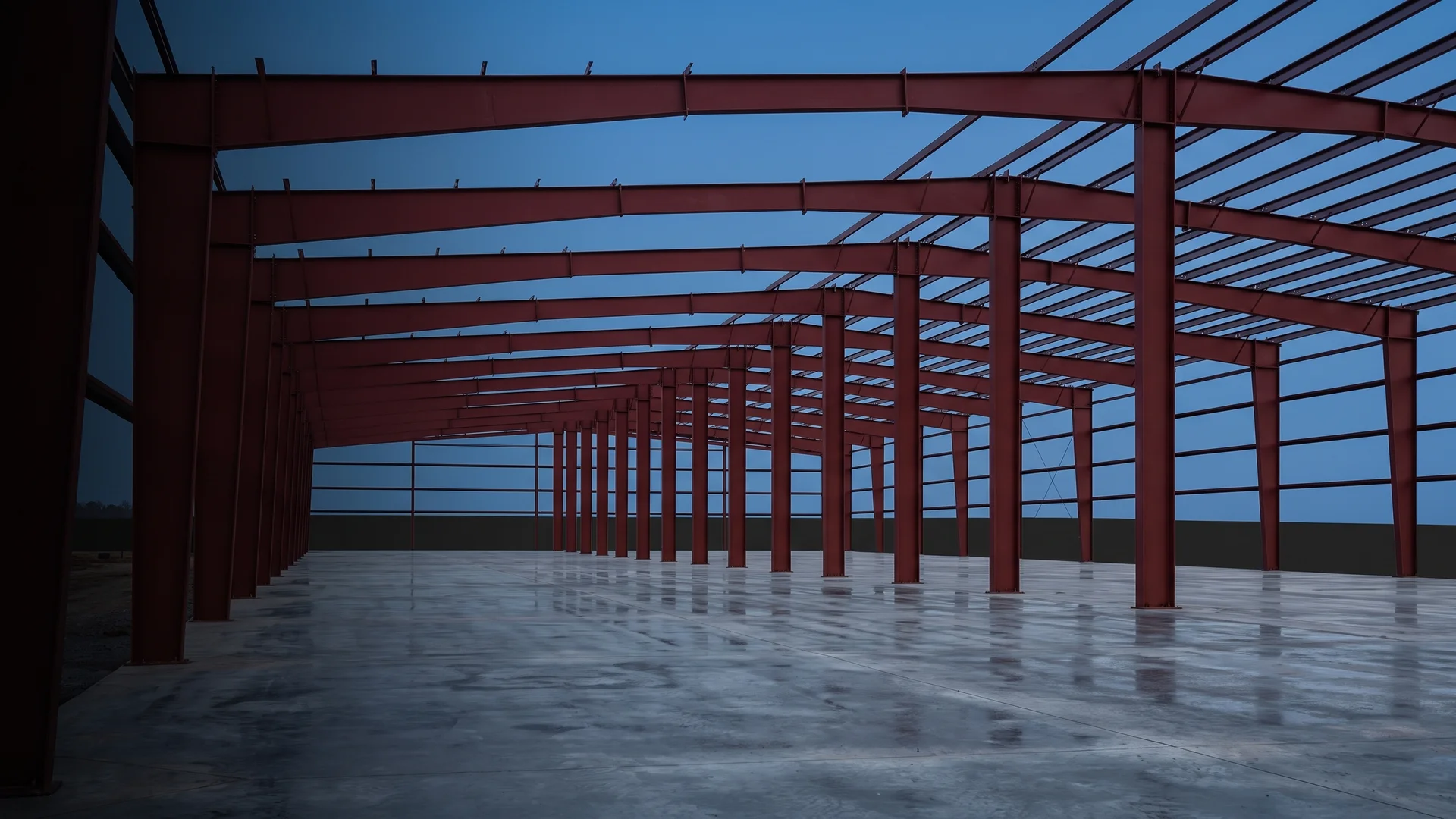
I-35 corridor coverage from Houston
Austin industrial and commercial construction, done with discipline
AP serves Austin and the Central Texas I-35 corridor with distribution, fleet, light industrial, branch, and workplace projects from its Houston headquarters.
- Preconstruction that settles cost, scope, and schedule before mobilization
- Bids leveled in BuildingConnected against Central Texas trades
- A Superintendent on site daily and Houston leadership at every milestone
Central Texas, covered from Houston
Austin is a growth market AP is actively pursuing, served by the same Houston-based team and delivery system behind the published Houston and Dallas-Fort Worth projects. What AP brings to Central Texas is a delivery system that has already produced a 20-bay truck service center, a regional fleet facility with fueling and CNG sensing, and a 108,040 SF tilt-wall industrial building elsewhere in the state.
Austin is a natural extension of that work. The corridor between San Antonio and the northern suburbs has drawn distribution, manufacturing, fleet, and financial users who need facilities to open on a date and run correctly from the first day. Those are the projects AP is built for, and the drive from Houston is short enough that leadership is in the room when it matters.
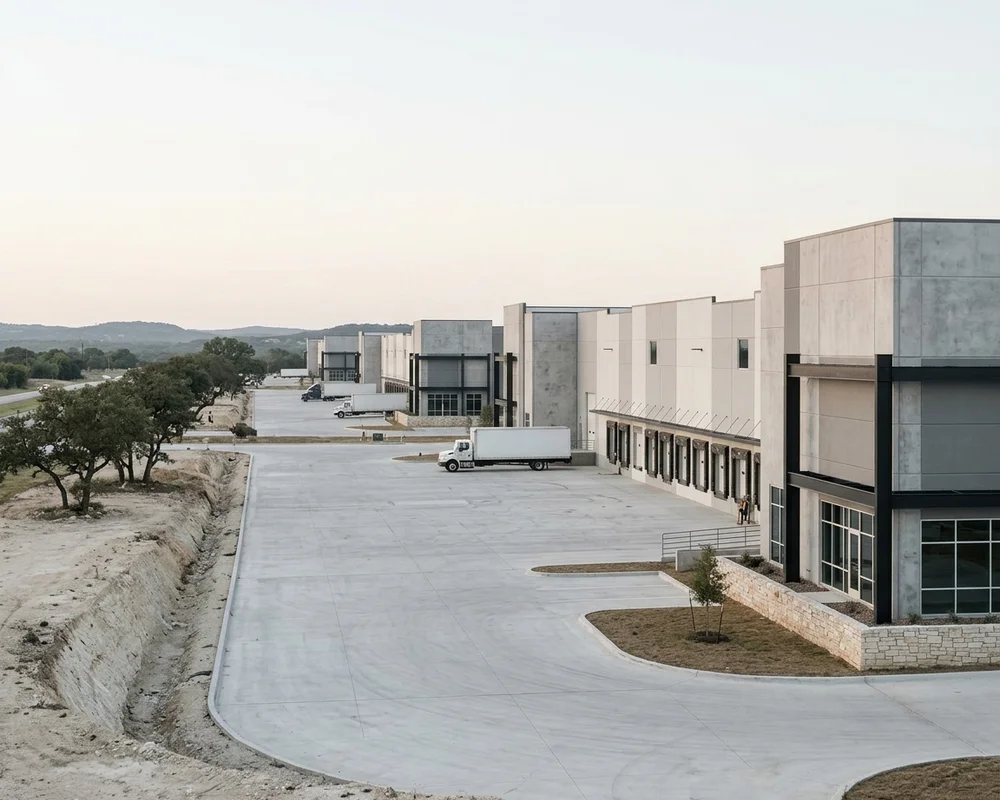
What Austin owners get from AP
Real evidence
Published project facts from Houston and Dallas-Fort Worth, delivered by the team that serves Austin.
Local numbers
Trade bids from prequalified Central Texas subcontractors, leveled in BuildingConnected on the full scope.
Jurisdiction mapped early
City, ETJ, or county confirmed in preconstruction, with every approval sequenced into the schedule.
Ground conditions priced
Geotechnical and civil review before the estimate, so rock, clay, and drainage are in the number from the start.
The I-35 corridor and Central Texas growth
Austin’s industrial and commercial growth runs along I-35 and the loops and toll roads that feed it, north toward Round Rock and Georgetown, south toward San Marcos, and east along the corridors toward the airport and the highway to Houston. Distribution users want proximity to the interstate and to a growing consumer base. Manufacturing and fleet users want sites with room for trucks and utilities that can carry the load. Banks and retailers follow the population into the suburbs.
Each of those users needs a building planned around its operation. A last-mile facility lives or dies on dock count, van staging, and circulation. A service center needs bays, lifts, fluid systems, and a yard that can take the traffic. A branch needs security, brand standards, and an opening date. AP plans for the operation first and the shell second.
From Georgetown to San Marcos
North of the city, Round Rock, Georgetown, Pflugerville, and Hutto have added business parks, distribution space, and manufacturing sites at a steady pace. Much of that new work sits east of I-35 in Williamson County, where land comes in larger tracts and the ground is flatter.
South of the city, Kyle and Buda sit between Austin and San Marcos. A building there can reach both the Austin and San Antonio markets along I-35, which draws distribution and service users who want two metros inside one day’s route.
Owners who search for an industrial builder near me want someone who knows the local roads, ground, and permitting. AP builds that knowledge parcel by parcel: how trucks reach the gate, where workers will come from, and whether utilities can serve the opening date.
Truck routes around I-35
I-35 through central Austin carries heavy traffic, and TxDOT’s long-running work on the interstate adds lane shifts and closures. SH-130 runs east of the city as a toll alternative between the northern suburbs and the south, and SH-45 ties it back to I-35 on both the north and south sides of the metro.
US-183 crosses the region on a northwest to southeast line, from Cedar Park and Leander down past the airport. US-290 heads east through Manor and Elgin toward Houston, and west into the Hill Country. Austin-Bergstrom International Airport, southeast of downtown, draws logistics and service users to the land along SH-71 and US-183.
For a distribution or fleet site, AP traces the loaded-truck route from highway to dock, and that route sets driveway placement, drive aisles, and yard grading.
Cities, counties, and ETJs
The Austin region is a patchwork. A parcel may fall inside the City of Austin, inside one of the fast-growing suburban cities, inside a city’s extraterritorial jurisdiction where some rules apply and others do not, or on unincorporated county land. The review process, the drainage and site development expectations, and the time it takes to get an answer change with each.
AP handles that as a preconstruction deliverable. We confirm the jurisdiction for the specific parcel, list every approval and who prepares it, and build review durations into the master schedule. Civil engineers, architects, and other licensed consultants prepare the submittals. AP coordinates the sequence and follows up so every comment letter gets a prompt answer.
City review and the suburbs
City of Austin site plan review, handled through its Development Services Department, often takes several rounds of comments before approval. Watershed rules, tree protection, impervious cover limits, and drainage standards all get attention before a permit is issued. A project inside the city should carry that time in its first schedule.
The suburban cities and the counties each run their own process. Round Rock, Georgetown, Pflugerville, Kyle, and their neighbors set their own development codes, and Travis, Williamson, and Hays counties regulate unincorporated land under different rules again. Some owners pick a suburban parcel partly for a more predictable path. Others need a city address and accept a longer review.
Rock, clay, and water
Central Texas ground is not Houston ground. Within a single site the subsurface can move from shallow limestone to expansive clay, and each calls for a different approach to excavation, foundations, and slab design. Water matters too: the region has its own drainage and water-quality expectations, and creeks and floodplains can shape how much of a parcel is buildable.
AP brings geotechnical and civil consultants into the site review before the estimate is built. The soils report drives the foundation and slab pricing. The drainage plan drives the footprint and paving. Owners get a number that reflects the parcel they own.
Hill Country west, Blackland Prairie east
The Balcones Escarpment runs roughly along I-35 and splits the region in two. West of it, the Hill Country brings limestone near the surface, slopes, creeks, and established trees. East of it, the Blackland Prairie brings deep, dark clays that swell when wet and shrink as they dry.
Each side changes the building. A Hill Country site can need rock excavation for utilities and footings, careful grading, and more retaining walls. A prairie site is usually flatter and easier to lay out, but the slab and paving have to be designed for clay movement, often with select fill, moisture conditioning, or a structural slab.
The Edwards Aquifer and water quality
Parts of the Austin area sit over the Edwards Aquifer recharge zone, where rain soaks through karst limestone, with its caves, sinkholes, and fractures, straight into the aquifer. Upstream lies the contributing zone, whose runoff drains toward the recharge area. Barton Springs in Zilker Park is fed by this system, and protecting it shapes development across southwest Austin and northern Hays County. The recharge zone also reaches into western Williamson County.
Inside those zones, TCEQ’s Edwards Aquifer rules can require an approved plan for controlling pollution before construction starts, along with permanent water-quality controls after the building opens. Local rules may add impervious cover limits and setbacks from sensitive features. A void or sinkhole opened during excavation has to be assessed before work continues near it.
AP checks the parcel against the aquifer maps before the estimate is built, so water-quality design, added review, and erosion controls sit in the budget and schedule from the start.
Heat, labor, and large-project competition
Central Texas summers are long and hot. Concrete pours shift to night or early morning, crews need shade, water, and rest breaks built into the day, and some finishes and sealants have temperature limits. AP plans summer work around those limits from the first schedule.
Labor is the other pressure. Large semiconductor and manufacturing campuses in east Travis and Williamson counties, along with steady commercial growth, draw on the same electricians, ironworkers, concrete crews, and equipment. When a big project ramps up, smaller jobs feel it in trade availability and pricing. AP plans for that with prequalified Central Texas trades bid through BuildingConnected and early release dates for long-lead equipment.
One system, extended to Austin
Every AP project runs the same way regardless of the city. Preconstruction settles cost, scope, and schedule, with estimating and bid leveling in BuildingConnected and long-lead items flagged with release dates. A Project Manager, Project Superintendent, and Project Coordinator carry the job from mobilization to turnover, with the superintendent on site daily and three-week look-ahead schedules driving the field. A third-party safety-management firm audits the site. Leadership stays involved from the first meeting to the opening.
For an Austin owner, that means a proven process arriving at a new address. The subcontractors are prequalified and local. The team is staffed for the job. And Houston is close enough that the people who priced the project can walk the site with you.
Delivery in Austin
How an Austin project runs
01
Parcel review
Jurisdiction, ETJ or county status, drainage, utilities, and ground conditions confirmed with licensed consultants.
02
Local pricing
Central Texas trades bid and leveled in BuildingConnected, long-lead items scheduled.
03
Staffed for the site
Superintendent daily, PM and Coordinator on the schedule, leadership at milestones.
04
Open on schedule
Inspections, commissioning, and turnover sequenced to the date set in preconstruction.
Evidence from elsewhere in Texas
All projects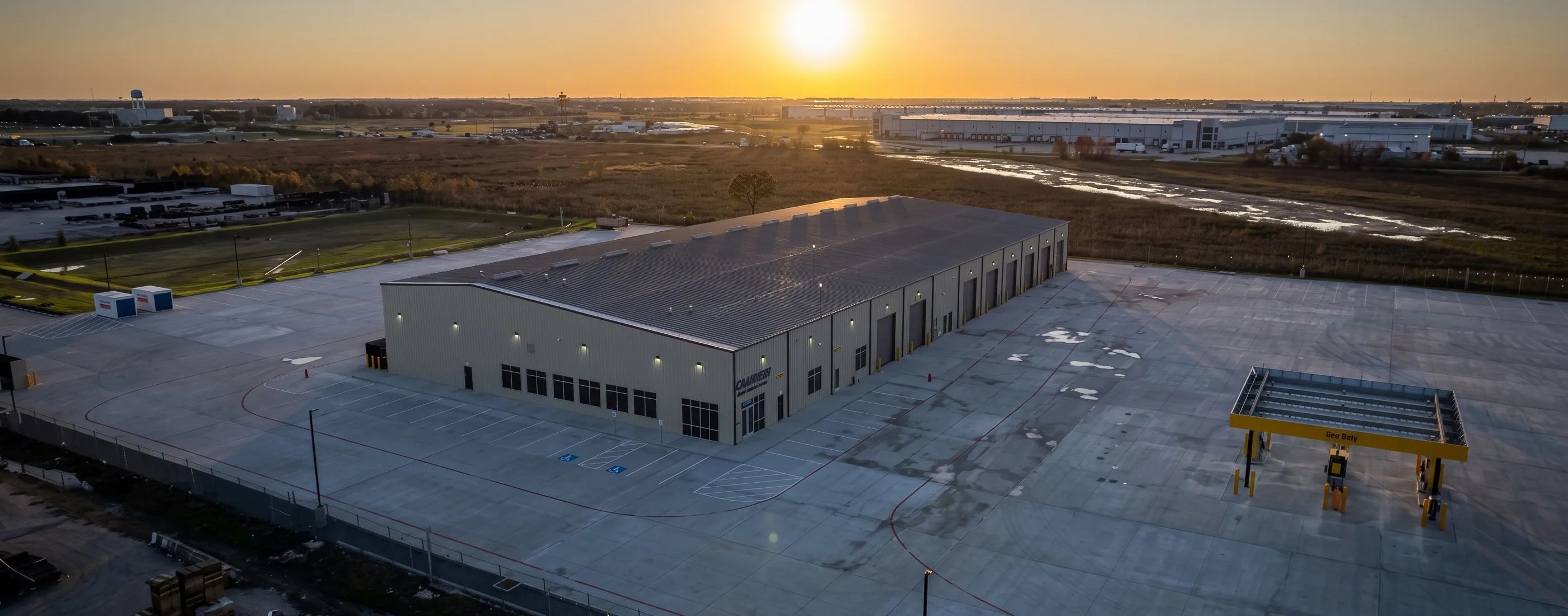
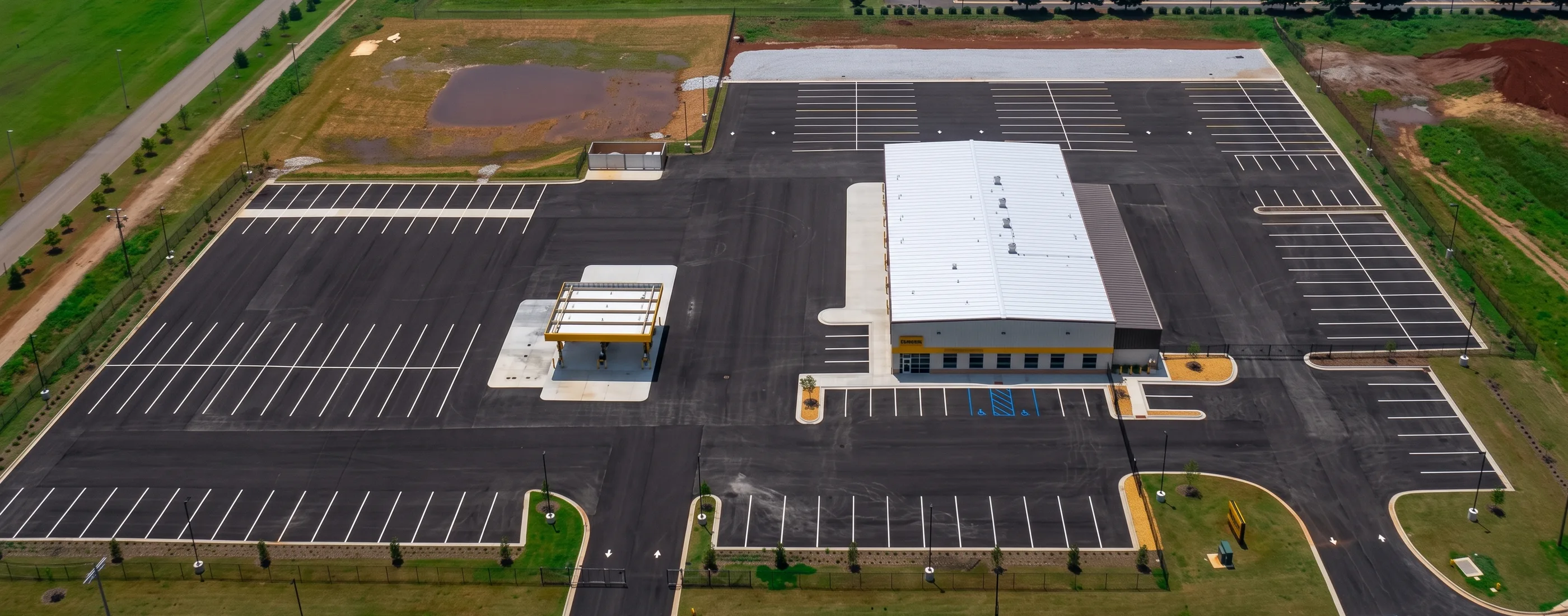
About Austin
Austin is the capital of Texas and the seat of Travis County. The Colorado River runs through the middle of the city, widening into Lady Bird Lake below downtown. The Texas State Capitol stands at the head of Congress Avenue, and the University of Texas at Austin sits just north of it.
Geography gives Austin two faces. To the west, the land climbs into the Hill Country, with limestone bluffs, Mount Bonnell’s view over the river, and the Highland Lakes chain upstream on the Colorado. To the east, it flattens into the Blackland Prairie, open farmland where much of the region’s new industry is going up.
The economy now reaches well past the Capitol and the campus. Technology firms, chip plants, healthcare systems, and young companies share the region with state agencies, and suburbs such as Round Rock, Cedar Park, Pflugerville, and Kyle have grown into cities of their own. Austin still calls itself the Live Music Capital of the World. On summer evenings, crowds gather at the Congress Avenue Bridge to watch bats pour out from under it, and Barton Springs Pool, fed by the aquifer beneath it, stays cool all year.
Building in Austin: questions
Has AP Construction completed a project in Austin?
AP’s published projects are in the Houston and Dallas-Fort Worth areas, and Austin is an active growth market served as part of the Texas service area. What comes to an Austin project is the same team, preconstruction system, and subcontractor bidding process that delivered the Penske and Dishaka facilities.
What kinds of Austin projects is AP looking for?
Distribution and logistics centers, truck and fleet facilities, light industrial and manufacturing buildings, bank branches, automotive service centers, retail build-outs, and substantial workplace projects. Ground-up and major build-outs across the markets AP serves. The team brings the same system used on the Penske and Dishaka facilities to each one.
How does AP staff an Austin project from Houston?
With a Project Superintendent on the site daily, a Project Manager and Project Coordinator running the schedule and submittals, and preconstruction and leadership traveling for site walks and milestones. Houston to Austin is a short drive, and the project team is built for the job.
What makes permitting in the Austin area different?
The region mixes the City of Austin, fast-growing suburbs, extraterritorial jurisdictions, and unincorporated county land, each with its own review process and expectations on site development and drainage. AP confirms the exact jurisdiction for a parcel in preconstruction and sequences the approvals into the schedule.
How do Central Texas site conditions affect an industrial building?
Ground conditions in the region can shift from shallow rock to expansive clay within a short distance, and that decides excavation, foundation, and slab approach. AP brings geotechnical and civil consultants into site review early so the estimate reflects the actual parcel rather than an assumption.
Can AP price an Austin project against local subcontractors?
Yes. Bidding runs through BuildingConnected with trades from AP’s prequalified database, and invitations go to firms that work Central Texas. Bids are leveled line by line so the owner sees a local number on the complete scope. Long-lead items get release dates in the same review.
How do the Edwards Aquifer rules affect a building site near Austin?
If the parcel sits in the recharge or contributing zone, TCEQ’s Edwards Aquifer rules can require an approved water-quality plan before construction starts, plus permanent stormwater controls after it ends. Local rules may also limit impervious cover. AP checks the parcel against the aquifer maps during site review, so design time and controls are priced from the start.
Should we build inside Austin city limits or in a suburb like Round Rock or Kyle?
It depends on what the facility needs. City of Austin site plan review is detailed and can run several rounds, while the suburban cities and the counties each run their own process. The right choice weighs truck access, utilities, labor, and review time together. AP compares the approval paths in preconstruction, before the land decision is final.
Why does SH-130 matter when choosing an Austin-area distribution site?
SH-130 gives trucks a toll route east of the city that bypasses the most congested stretch of I-35, and SH-45 ties it back to the interstate on the north and south sides of the metro. A site near those links can shorten routes. AP maps the loaded-truck path from highway to dock during site review.
How does summer heat around Austin change a construction schedule?
Concrete placement moves to night or early morning, crews need water, shade, and rest built into the day, and some coatings, sealants, and roofing products have temperature limits. AP sequences slabs, wall panels, and exterior finishes with the season in mind, so the hottest weeks carry the work that heat affects least.
Do large manufacturing projects in Williamson and east Travis counties affect trade pricing?
They can. Big semiconductor and manufacturing campuses draw on the same electricians, ironworkers, concrete crews, and equipment as smaller jobs, and availability tightens when one ramps up. AP bids each scope to prequalified Central Texas trades through BuildingConnected, levels the numbers line by line, and sets early release dates for long-lead equipment.
Does the instant estimate cover sites in the Austin area?
Yes. The estimate wizard includes an Austin market covering Travis, Williamson, and Hays counties, with its own location index and a moderate soil default for expansive clay. It returns a planning range for the building alone. Site work, utility extensions, permit fees, and design fees sit outside it, so treat it as a starting point.
Planning a facility in the Austin area?
Send us the parcel and the program. We will confirm the jurisdiction, review the ground, and tell you what it should cost and when it can open.