
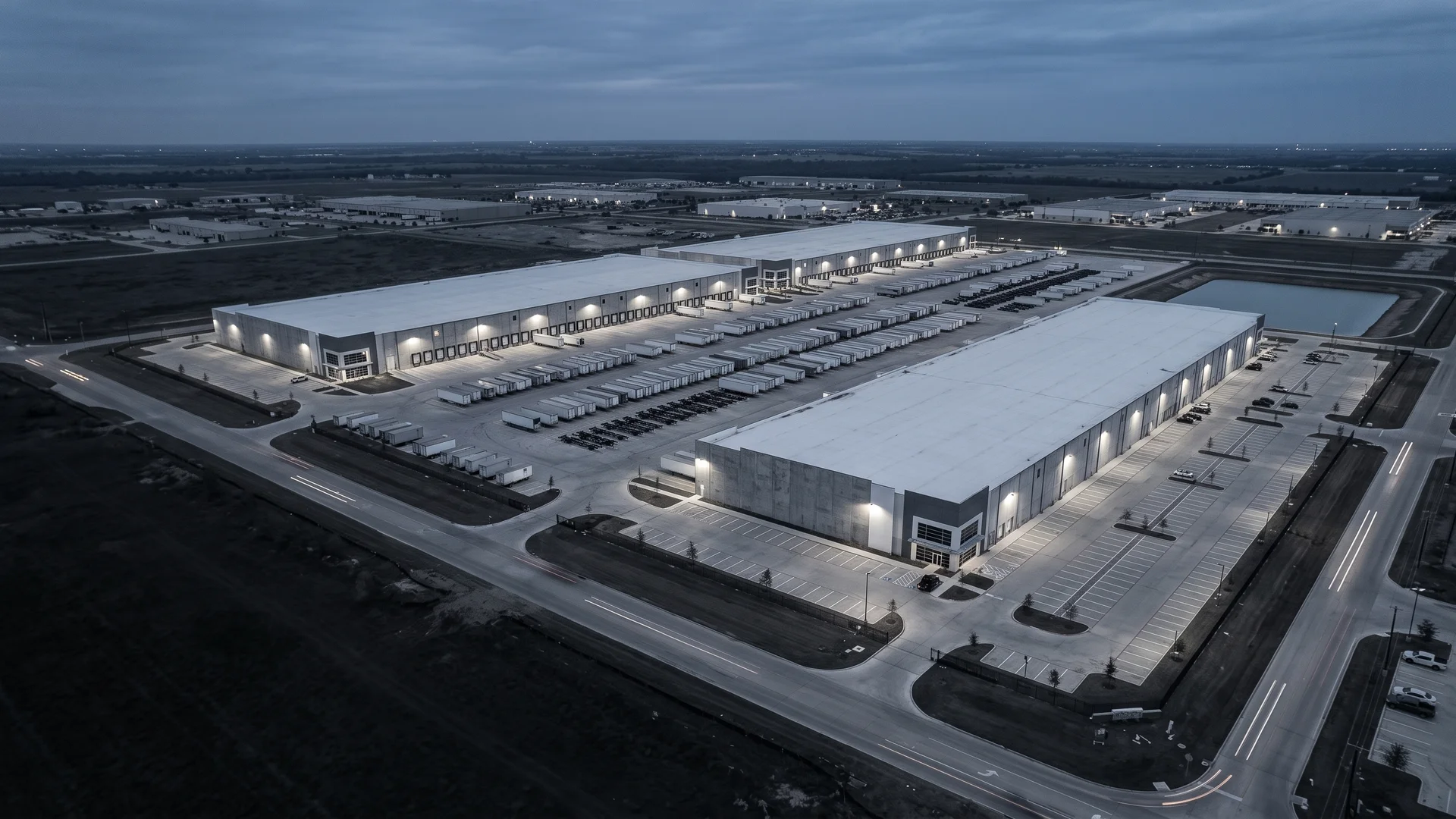
South Texas freight and fleet coverage
San Antonio construction for facilities that move freight
Distribution centers, fleet yards, manufacturing, branches, and commercial projects where I-35 meets I-10, delivered by AP from Houston.
- Fleet facility experience from two Penske projects, applied to South Texas yards
- Jurisdiction and environmental review mapped in preconstruction
- Local trade pricing leveled in BuildingConnected
A freight crossroads, and the facilities it needs
AP’s published projects are in the Houston and Dallas-Fort Worth areas, and San Antonio is a growth market we are actively pursuing with the same team. What we bring to South Texas is a record elsewhere in the state: a 20-bay truck service center with eight acres of paving, a regional fleet facility with fueling and CNG sensing, and a 108,040 SF tilt-wall industrial building, each planned around how the owner needed it to operate.
San Antonio is where that experience fits. Freight from the border and the Gulf Coast crosses the city on I-35 and I-10, and the users along those corridors need distribution centers, cross-docks, truck yards, and manufacturing buildings that open on schedule and run correctly. Banks, retailers, and automotive brands follow the region’s growth into its suburbs. AP pursues all of them here.
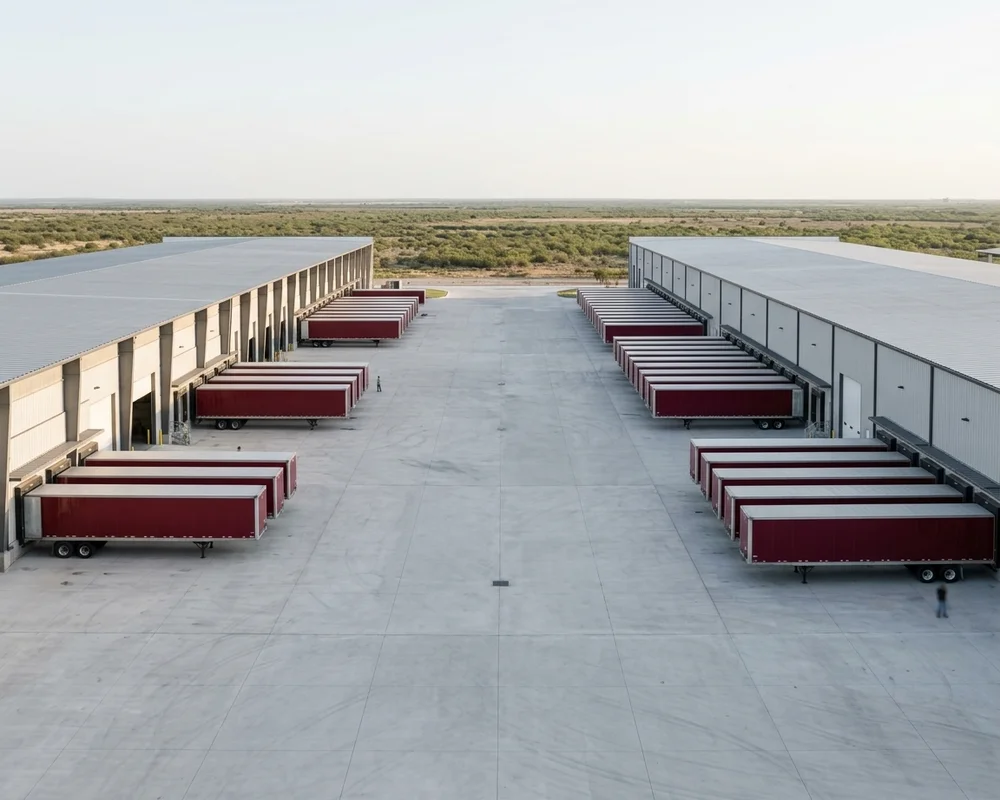
What San Antonio owners get from AP
Operational planning
Circulation, docks, bays, paving, and systems settled around the operation, learned on fleet and industrial work in Texas.
South Texas pricing
Prequalified trades that work the region, bid and leveled in BuildingConnected.
Approvals scheduled
City, ETJ, county, and any water-quality review identified and sequenced before mobilization.
Accountable on site
A Superintendent daily, a PM and Coordinator on the schedule, third-party safety audits, leadership at milestones.
Where I-35 meets I-10
Few Texas cities sit on two freight spines at once. I-35 carries border trade north through San Antonio toward Austin and Dallas-Fort Worth. I-10 carries Gulf Coast and Houston traffic west toward El Paso and beyond. Loop roads tie the two together and put industrial land within reach of both. For a distribution operator, a carrier, or a manufacturer shipping in both directions, that geography is the reason to be here.
It also sets the demands on the site. Trucks arrive from the interstate in volume and at all hours. Yards need queuing, staging, and turning room for tractor-trailers. Paving has to carry repeated axle loads without failing. Drainage has to handle intense rain on flat or gently sloping ground. AP plans those elements before the building is fixed, because they decide whether the facility works on its first day.
Corridors and industrial rings
AP starts a South Texas site review with the road network, because each corridor serves a different user. I-35 runs north through the northeast suburbs toward New Braunfels and Austin. Southbound, it heads to Laredo and the border crossings that carry heavy truck trade with Mexico. I-37 runs southeast to Corpus Christi and its port. I-10 runs east toward Seguin and Houston and west into the Hill Country.
Two loops tie those spokes together. Loop 410 circles the older core, with much of the established industrial and flex space along it. Loop 1604 forms the outer ring, where newer parks and larger parcels have followed growth.
The submarkets differ. The northeast corridor along I-35, through Live Oak, Selma, Schertz, and on toward New Braunfels, draws distribution and light manufacturing that serve both San Antonio and Austin. The south and southwest sides carry border and port freight. Port San Antonio, built on the former Kelly Air Force Base, has become an industrial, aerospace, and technology campus. Joint Base San Antonio adds a military presence that supports suppliers, service firms, and commercial growth nearby.
Facilities the region needs
The projects AP pursues in South Texas match the freight pattern. Distribution centers and cross-docks that need dock count, trailer parking, and throughput planned together. Truck and fleet facilities with bays, lifts, fueling, DEF, wash systems, and driver space, of the kind AP delivered for Penske in the Houston and Dallas-Fort Worth areas. Light manufacturing and assembly buildings where office, production, and warehouse share one roof and one site plan, as at Dishaka. Bank branches and automotive service centers following the population into the suburbs, and retail build-outs with fixed opening dates.
Approvals in and around the city
A San Antonio parcel can sit inside the city limits, in a surrounding municipality, in an extraterritorial jurisdiction, or on unincorporated county land, and each runs its own plan review, fire review, and inspections. Parts of the region also carry water-quality and aquifer-protection requirements that add an environmental review path.
AP identifies the jurisdiction and any environmental path for the specific parcel during preconstruction, lists every approval and who prepares it, and builds the review durations into the master schedule. Civil and environmental consultants and the design team prepare the submittals under their licenses. AP coordinates the sequence and follows through, so the permit arrives in step with mobilization.
Inside the city, plans go through the City of San Antonio Development Services Department. Suburbs such as Schertz, Selma, Live Oak, and New Braunfels run their own reviews, and Bexar, Comal, and Guadalupe counties handle unincorporated land, since the northeast suburbs cross into all three. Highway access near an interstate or state road can also need a TxDOT driveway permit, which AP adds to the approval list.
Building over the Edwards Aquifer
The Edwards Aquifer is the region’s main source of drinking water, and it sits under the north side of the metro. Where the limestone reaches the surface, rain soaks straight into the aquifer. That area is the recharge zone. The land uphill that drains toward it is the contributing zone. Much of the growth along and beyond Loop 1604 on the north side sits over one or the other.
Development there carries extra steps. TCEQ oversees water-quality plans for regulated construction over these zones, and the city and some suburbs add their own aquifer protection rules. The Edwards Aquifer Authority, which manages pumping, has requirements of its own. On a commercial site, the result can be permanent stormwater treatment, limits on paved area, and closer control of fuel and chemical storage. AP confirms the zone with the civil engineer during due diligence and lays out any yard or fuel area around the water-quality plan.
Flash floods and site drainage
Central and South Texas storms can drop heavy rain in a short time, and creeks across the city rise fast. Low-water crossings close, and a road that serves a site on a dry day can be cut off by afternoon.
AP checks the parcel against floodplain maps and works with the civil engineer on detention, outfalls, and finished floor heights. The City of San Antonio, Bexar County, and the San Antonio River Authority each play a role in floodplain and watershed planning. AP plans at least one truck route that stays open when a nearby crossing floods, and weather days go into the schedule from the start.
Rock, clay, and heat
Ground conditions change across the metro. On the north side, thin soil often sits over caliche and limestone. Footings, truck pits, fuel tanks, and utility trenches can need rock equipment and more time. On the south and east sides, parcels more often sit on dark clays that swell when wet and shrink when dry, which moves slabs and paving not designed for it.
AP prices site work from the geotechnical report, with rock excavation and moisture treatment as line items. Long, hot summers shape the field plan too. Slab, tilt-wall panel, and paving pours often move to early morning or night with curing planned, and crews work under a heat plan with water, shade, and rest breaks.
What transfers from AP’s projects
AP’s completed work is in the Houston and Dallas-Fort Worth areas, and each project answers a question a South Texas owner will ask. The eight acres of truck paving at Penske Katy solve the circulation problem a yard off Loop 410 or I-35 presents. The two-lane fuel island for diesel, gasoline, and DEF at Penske Dallas carried its own permitting and testing, a path that gets closer review over the aquifer. Dishaka’s 108,040 SF tilt-wall building puts office, production, and warehouse on one nine-acre site, a mixed program a manufacturer on the northeast corridor may need.
Delivering from Houston
AP is headquartered in Houston and covers San Antonio as part of its Texas service area. On the ground that means a Project Superintendent at the site every day, a Project Manager and Project Coordinator running the schedule, submittals, RFIs, and change control, and preconstruction and leadership making the drive for site walks, owner meetings, and the milestones that need them present. Three-week look-ahead schedules keep the field sequenced, and a third-party safety-management firm audits the jobsite.
Pricing comes from the region. Subcontractors enter AP’s database through a prequalification process, invitations go to firms that work South Texas, and bids are leveled in BuildingConnected so the owner sees a local number on the complete scope.
An owner who searches for a commercial builder near me usually wants a team that shows up. AP answers with a named field team, a schedule built on local approvals, and leadership on I-10 for the milestones.
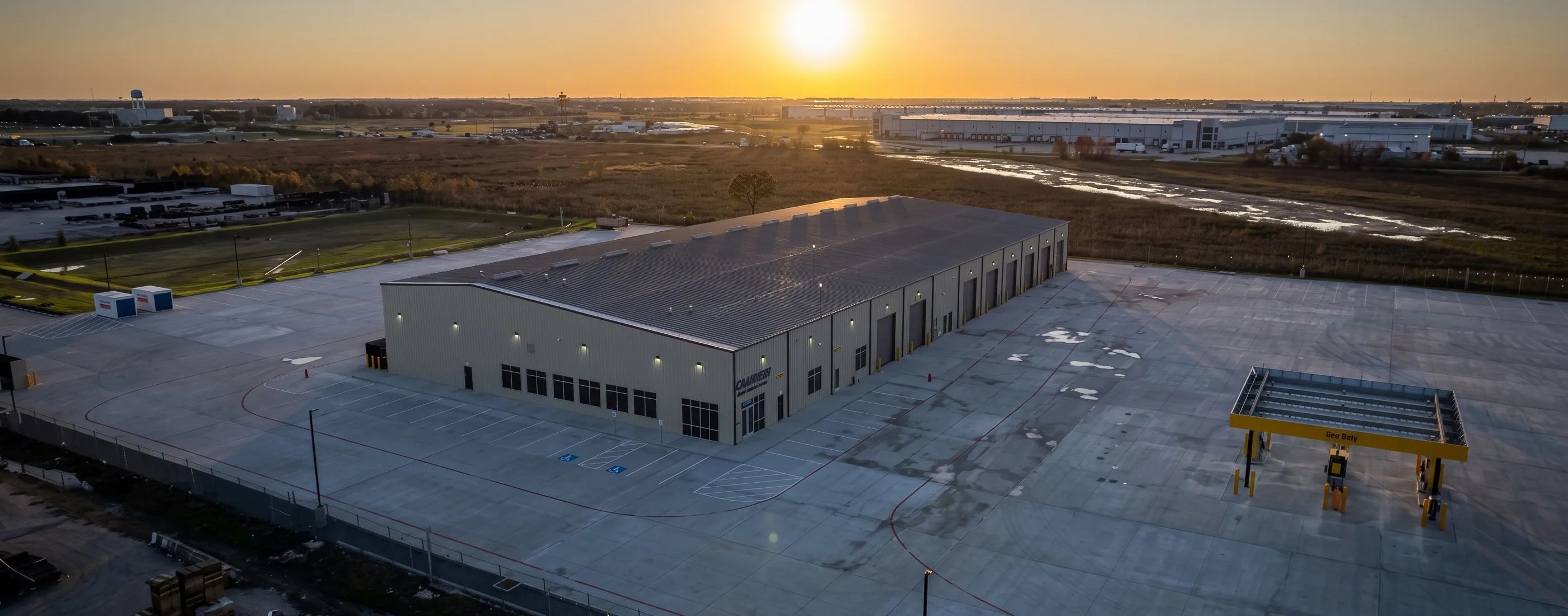
Relevant experience
Penske Katy Service Center
- A 20-bay truck service facility with office and training space, a 140-foot truck wash, and eight acres of heavy-duty paving west of Houston.
- A freight-corridor site west of Houston planned around heavy truck circulation, queuing, staging, and eight acres of paving that has to take repeated axle loads. The same planning questions decide a San Antonio yard, terminal, or service center.
Delivery in San Antonio
How a South Texas project runs
01
Parcel and approvals
Jurisdiction, environmental path, drainage, and utilities confirmed with licensed consultants before pricing.
02
Regional pricing
South Texas trades bid and leveled in BuildingConnected, long-lead items released to hold the date.
03
Field team in place
Superintendent daily, PM and Coordinator on the schedule, safety audited by a third party.
04
Turnover on the date
Commissioning, inspections, and closeout sequenced to the operational date set in preconstruction.
About San Antonio
San Antonio grew from a Spanish mission settlement founded in the early 1700s along the San Antonio River. The Alamo stands downtown, and together with four missions to the south it makes up the San Antonio Missions World Heritage Site. The River Walk winds below street level through downtown, and the river’s Mission Reach links it south to the missions.
The city sits on the edge of two landscapes. The Balcones Escarpment marks where the Texas Hill Country rises to the north and west, while flatter brush country and farmland open to the south. That line shapes the soils, the creeks, and the aquifer that supplies the city’s water.
The economy is broad. Military City USA is the local nickname, earned through Joint Base San Antonio and generations of service families. Healthcare, bioscience, finance, tourism, and manufacturing are major employers, and freight on I-35 and I-10 ties the region to Mexico, the Gulf Coast, and the rest of Texas. Spring brings Fiesta, a citywide celebration, and the city’s Tejano and Mexican heritage shows up in its food, music, and architecture year-round.
Building in San Antonio: questions
Does AP have completed projects in San Antonio?
AP’s published projects are in the Houston and Dallas-Fort Worth areas, and San Antonio is an active growth market covered as part of the Texas service area. A San Antonio project gets the same preconstruction, bidding, and field system used on the Penske and Dishaka facilities, run by the same team.
Why is San Antonio a fit for AP’s markets?
The city sits where I-35 and I-10 cross, with freight moving between the border, the Gulf Coast, and the rest of the state. That traffic supports distribution centers, truck and fleet facilities, cross-docks, and manufacturing, which are the operational facilities AP is built to plan and deliver.
How would AP run a South Texas jobsite from Houston?
The same way it runs every job. A Project Superintendent is on the site every day, a Project Manager and Project Coordinator manage the schedule and submittals, and preconstruction and leadership travel for site walks and milestones. Houston to San Antonio is a routine drive.
What should an owner know about San Antonio site approvals?
The parcel may sit inside the city, inside a suburb, in an extraterritorial jurisdiction, or on county land, and the region takes water quality and aquifer protection seriously in some areas. AP confirms the jurisdiction and any environmental review path in preconstruction and schedules each approval.
Can AP deliver a fleet or truck facility in San Antonio?
Yes. AP delivered the Penske Katy Service Center with 20 bays, a 140-foot wash, and 8 acres of heavy-duty paving, and the Penske Dallas facility with fueling, CNG sensing, and lifts. The circulation, paving, and systems planning from those projects applies directly to a South Texas yard.
Will pricing reflect San Antonio subcontractors?
Yes. Trades from AP’s prequalified database that work South Texas are invited through BuildingConnected, and every bid is leveled line by line on the same scope. The owner sees which firm is priced on the complete work and what the local market number is.
Which parts of greater San Antonio suit distribution and fleet sites?
Most freight land sits near the interstates and the two loops. The northeast I-35 corridor through Live Oak, Selma, and Schertz serves the Austin side, while the south and southwest sides serve Laredo and Corpus Christi traffic. AP checks truck access, zoning, utilities, and drainage on any parcel an owner is weighing.
How does the Edwards Aquifer recharge zone affect a north San Antonio site?
Sites over the recharge or contributing zone can need state water-quality approval before ground is broken, plus permanent stormwater treatment and limits on paved area. AP confirms early whether a parcel sits in either zone, brings in the civil engineer, and schedules TCEQ and local reviews before pricing the site work.
How do flash floods and low-water crossings shape a San Antonio site plan?
Heavy storms can raise creeks and close low-water crossings in hours. AP checks the parcel against city, Bexar County, and San Antonio River Authority floodplain information, confirms detention needs with the civil engineer, and plans truck access that stays usable in a storm. Rain days are built into the schedule.
What do caliche, limestone, and clay soils mean for foundations around San Antonio?
North side parcels often hit caliche or limestone near the surface, which slows excavation for footings, pits, and utilities. South and east side parcels more often sit on clays that swell and shrink with moisture. AP prices from the geotechnical report so the foundation and paving design match the ground under that site.
Is building in Comal or Guadalupe County different from Bexar County?
Often, yes. Schertz, Selma, and New Braunfels each run their own plan review, and some parcels near them sit in an extraterritorial jurisdiction or on county land. Utility providers can also change across the county line. AP lists every reviewing office for the exact parcel and builds each review time into the schedule.
Can AP build a tenant facility at Port San Antonio?
AP pursues industrial, fleet, and light manufacturing work across South Texas, and Port San Antonio on the former Kelly Air Force Base is one of the region’s main industrial centers. For a site there, AP confirms with the owner, the Port, and the city which design and permit reviews apply before setting the schedule.
Planning a facility in San Antonio or South Texas?
Send us the parcel and the program. We will confirm the approvals, price it against the regional trade market, and show you what the yard and the schedule will demand.